

Everyone’s art therapy journey looks a little different. In a 60-minute session, you can expect to spend time being creative in a way that is meaningful to you.
This might include, for example:
To find out more about how individual art therapy can be tailored to you, please get in touch.
A neurodiversity affirming approach benefits and supports all people. Neurodiversity includes those who are neurotypical, neurodivergent, those with diagnoses, and those without.
Neurodiversity refers to the natural diversity of human brains and the many different ways people think, learn, communicate, process information, and engage with the world.
In practice, a neurodiversity-affirming approach focuses on understanding each person's unique experiences, strengths, values, goals, and support needs. Rather than trying to change who someone is, it aims to provide support that helps them thrive in ways that are meaningful to them.
Neurodiversity-affirming support in art therapy might include creating an environment that works with your sensory preferences, adapting communication or the way a session is structured to suit you, or suggesting materials that support your comfort and creative style. This can be done collaboratively - with you being supported to ask for what you need - or through a shared journey of figuring out what works best for you.
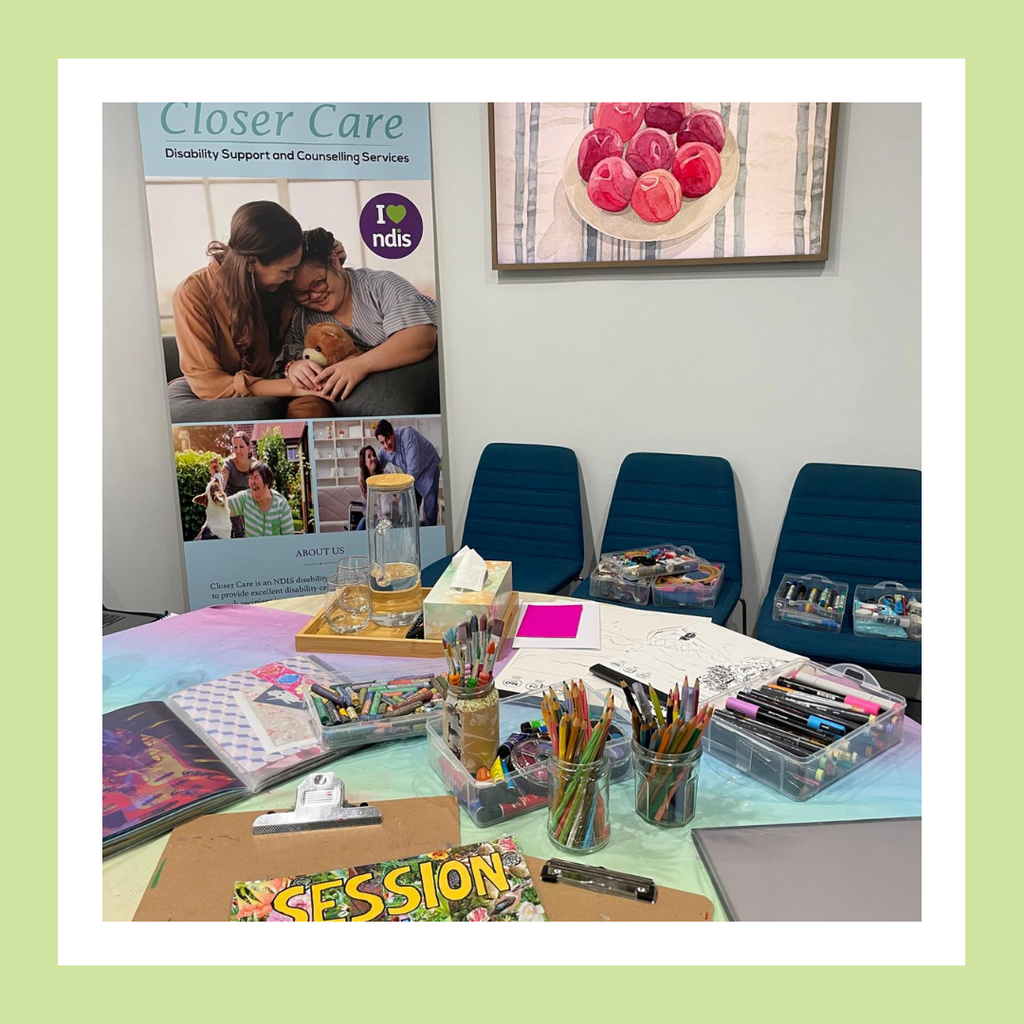
Materials that may be available:
You are welcome to bring your own journal for your art or writing.
You are welcome to bring materials from home. Spill-able materials such as ink and oil paints may not be suitable for this space.
Yes! You can take home anything you make in Art Therapy. You are welcome to leave works in progress with the Art Therapist.
If you would like the Art Therapist to store your artwork, it will be kept for up to 7 years. Your artwork will be kept in a private and secure location.
In-person Art Therapy is offered at Closer Care and can be paid for with an NDIS package or privately (self-funded).
Click here to read the official statement from the Australian, New Zealand and Creative Arts Therapies Association on using NDIS funding for Art Therapy and prescribed fee.
To receive Art Therapy services from Ellie you will be invited to register with Closer Care in Gladesville, NSW.
Closer Care is an NDIS-registered service provider. Alongside Art Therapy, Closer Care offers support work services and community-based social events.
An NDIS package is not required to access Ellie's Art Therapy services at Closer Care.
Unit 3, Level 4/436 Victoria Road, Gladesville NSW 2111
Ellie has availability for new clients on Fridays.
Ellie Bortz acknowledges the Gadigal and Wallumedegal peoples as the Traditional Custodians of the lands on which she works.